The Cantata Trail

A listening journey through Bach's vocal music

Part II/4: Burial

St. John Passion, BWV 245.1

The closing scene of the Passion, related to Jesus’ entombment, opens with an Evangelist recitative, on text inserted from St. Matthew’s Gospel (Matthew 27: 51–52). Bach sets the dramatic account by illustrating the earthquake via a rapid descending scale on the basso continuo line, followed by constant tremolos on the lowest notes of the violoncello register.

The tenor arioso that follows is again based on Brockes’ text, with modifications to turn it more personal and to follow Matthew’s depiction of the earthquake more closely by referencing the torn veil, cracked rocks, and open graves. Bach reinforces this connection by continuing the use of low tremolos on the strings, while the winds soar above them with sustained long notes. The structure is sustained over a continuo pedal point. The arioso ends on a rhetorical question (“[My heart,] what will you do for your part?”) for which Bach changes the sonority by removing the winds and the continuo and softening the strings’ texture.

The question leads to the following movement, a tender and instrospective aria for soprano accompanied by flute, oboe da caccia and continuo. It’s set in the key of F minor, which gives it a particularly fragile tone color. The text of the aria, which borrows some content from the last lines of Brockes’ source segment for the previous arioso, answers the question: the believer’s heart will “dissolve in floods of tears”, because “[its] Jesus is dead.” The musical language puts the four lines on equal footing, all contributing towards painting the musical picture by partaking in its building blocks: the aria’s signature ornamented upward sixth (illustrating sorrow or longing), softly undulating motifs (water), a beating heart (five sixteenths on the same pitch connected under a slur), tears as staccato sixteenths. For part B, Bach uses word painting on “tot” (“dead’): long notes with battement on the voice, and repeated long appoggiaturas. The aria follows an abbreviated da-capo structure, with the original material brought back in modified form to restate the opening lines.

The aria is followed by a long stretch of Gospel delivered by the Evangelist. He narrates the circumstances that lead to fulfillment of additional verses of scripture (Psalm 34: 20, “not one of [his bones] will be broken”; Zechariah 12: 10, “they will look on me, the one they have pierced”). Bach highlights the quoted scripture by marking those passages “adagio”, indicating a measured delivery instead of the freer, speech-like cadence of the typical recitative.

An moment of community reflection comes next, via a chorale setting of stanza 8 of Michael Weiße’s Passion hymn, whose first stanza was used to open Part II. Bach raises the key signature he used before by a half step.

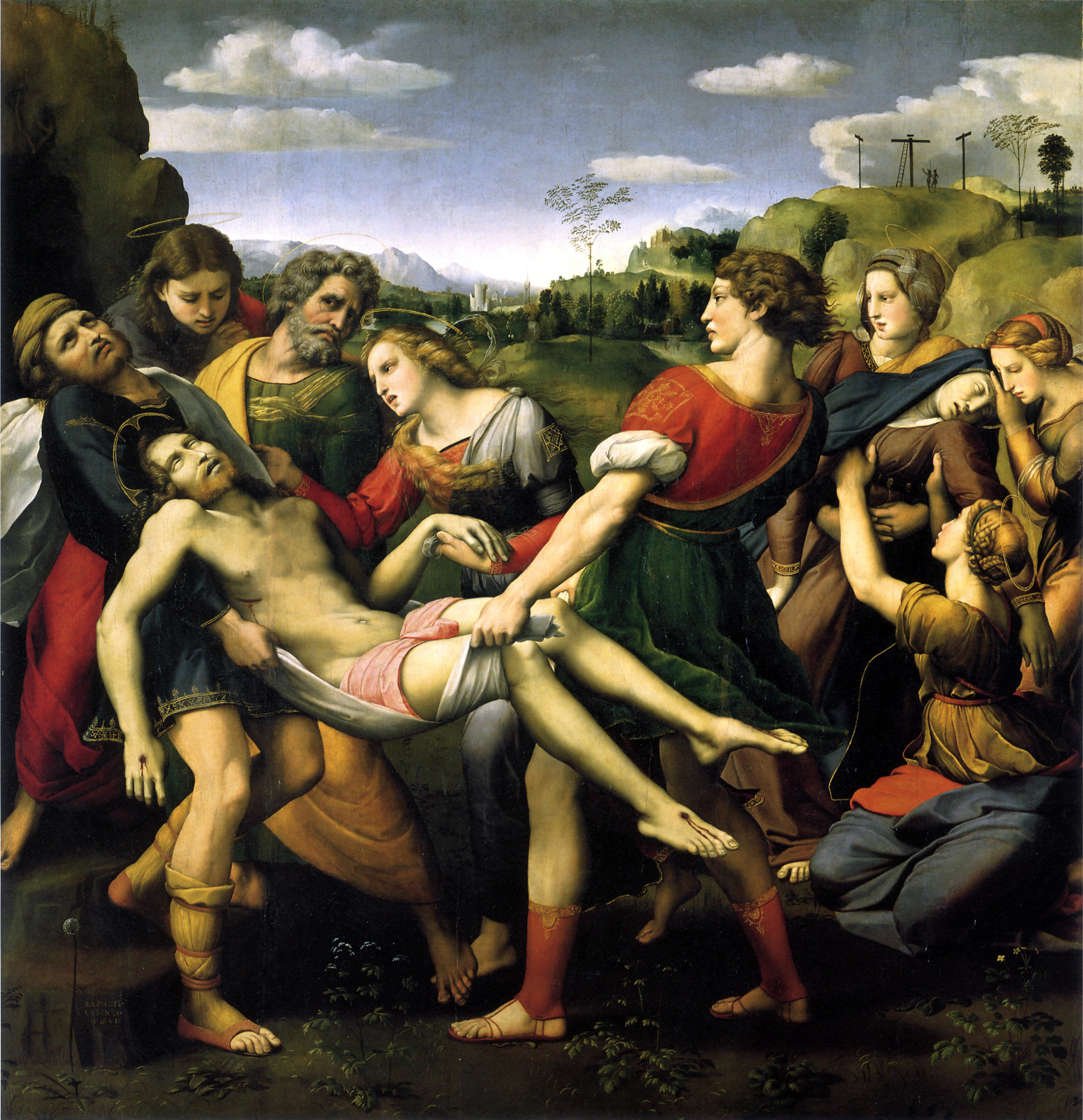
The final verses of John 19 are delivered in the last Evangelist recitative, describing how Joseph of Arimathea and Nicodemus prepare Jesus’ body and lay it in the grave. The concept and significance of the tomb carry forward into the final chorus, a communal meditation on the tomb, which seems to be a substantial reworking of Brockes’ final aria. The main clues that the two texts are connected are the term “Ruh” (“Rest”) and the last line, which is almost identical in both. Bach’s text mentions the “holy limbs”, while Brockes refers more directly to Jesus’ arms and eyes. The believer’s grief gives way to rest, and the tomb, symbolizing the end of suffering, “opens heaven and closes hell”.

Musically, Bach sets the text as a da-capo structure, but recapitulates early in section B, giving us a roadmap of A-BAB-A. The opening motif, repeated three times initially and recurring often, is a clear reference to rest and laying in the grave. The choir delivers the text homophonically throughout. There’s no contrapuntal constructs or imitation among voices, and the overall effect is one of calm and introspection. The B section, where the direct references to the tomb come in, is lighter in texture. The first time, Bach silences all instruments except the continuo. The second time he keeps only upper strings in short staccato quarter notes and removes the basses and the continuo, creating a “bassetto” segment to portray lightness.

The work ends with a communal prayer in the form of a chorale, set to stanza 3 of Martin Schalling’s “Herzlich lieb hab’ ich dich, o Herr”, a familiar funeral hymn dating from 1569. The text traverses death, rest in the grave, and resurrection, transforming Christ’s Passion into the believer’s own hope of eternal salvation.
Burial
33. Rezitativ (T)

EVANGELIST
Und siehe da, der Vorhang im Tempel zerriß in zwei Stück von oben an bis unten aus. Und die Erde erbebete, und die Felsen zerrissen, und die Gräber täten sich auf, und stunden auf viele Leiber der Heiligen.
33. Recitative (Tenor)

EVANGELIST
And behold, the veil of the temple was torn in two from top to bottom. And the earth quaked, and the rocks split, and the graves were opened, and many bodies of the saints arose.

Matthew 27: 51-52
34. Arioso (T)
Mein Herz, in dem die ganze Welt
Bei Jesu Leiden gleichfalls leidet,
Die Sonne sich in Trauer kleidet,
Der Vorhang reißt, der Fels zerfällt,
Die Erde bebt, die Gräber spalten,
Weil sie den Schöpfer sehn erkalten,
Was willst du deines Ortes tun?
34. Arioso (Tenor)
My heart, in which the whole world
Suffers likewise in Jesus’ suffering,
The sun clothes itself in mourning,
The veil is torn, the rock splits,
The earth trembles, the graves open,
Because they see the Creator grow cold,
What will you do for your part?
35. Aria (S)
Zerfließe, mein Herze, in Fluten der Zähren
Dem Höchsten zu Ehren!
Erzähle der Welt und dem Himmel die Not:
Dein Jesus ist tot!
35. Aria (Soprano)
Dissolve, my heart, in floods of tears
To honor the Most High!
Proclaim to the world and to heaven the distress:
Your Jesus is dead!
36. Rezitativ (T)

EVANGELIST
Die Jüden aber, dieweil es der Rüsttag war, dass nicht die Leichname am Kreuze blieben den Sabbat über (denn desselbigen Sabbats Tag war sehr groß), baten sie Pilatum, dass ihre Beine gebrochen und sie abgenommen würden. Da kamen die Kriegsknechte und brachen dem ersten die Beine und dem andern, der mit ihm gekreuziget war. Als sie aber zu Jesu kamen, da sie sahen, dass er schon gestorben war, brachen sie ihm die Beine nicht; sondern der Kriegsknechte einer eröffnete seine Seite mit einem Speer, und alsobald ging Blut und Wasser heraus. Und der das gesehen hat, der hat es bezeuget, und sein Zeugnis ist wahr, und derselbige weiß, dass er die Wahrheit saget, auf dass ihr gläubet. Denn solches ist geschehen, auf dass die Schrift erfüllet würde: "Ihr sollet ihm kein Bein zerbrechen". Und abermal spricht eine andere Schrift: "Sie werden sehen, in welchen sie gestochen haben".
36. Recitative (Tenor)

EVANGELIST
But the Jews, because it was the day of Preparation, so that the bodies might not remain on the cross over the Sabbath (for that Sabbath was a very great day), asked Pilate that their legs might be broken and that they might be taken away. Then the soldiers came and broke the legs of the first and of the other who had been crucified with him. But when they came to Jesus and saw that he was already dead, they did not break his legs; instead one of the soldiers pierced his side with a spear, and immediately blood and water came out. And he who saw it has borne witness, and his testimony is true, and he knows that he speaks the truth, so that you may believe. For these things happened so that the Scripture might be fulfilled: “Not one of his bones shall be broken.” And again another Scripture says: “They shall look on him whom they have pierced.”

John 19: 31-37
37. Choral
O hilf, Christe, Gottes Sohn,
Durch dein bitter Leiden,
Dass wir dir stets untertan
All Untugend meiden,
Deinen Tod und sein Ursach
Fruchtbarlich bedenken,
Dafür, wiewohl arm und schwach,
Dir Dankopfer schenken!
37. Chorale
O help us, Christ, Son of God,
Through your bitter suffering,
That we may always be subject to you
And avoid all vice,
That we may fruitfully consider
Your death and its cause,
And though poor and weak,
Offer you sacrifices of thanks!
38. Rezitativ (T)

EVANGELIST
Darnach bat Pilatum Joseph von Arimathia, der ein Jünger Jesu war (doch heimlich aus Furcht vor den Jüden), dass er möchte abnehmen den Leichnam Jesu. Und Pilatus erlaubete es. Dero wegen kam er und nahm den Leichnam Jesu herab. Es kam aber auch Nicodemus, der vormals bei der Nacht zu Jesu kommen war, und brachte Myrrhen und Aloen untereinander, bei hundert Pfunden. Da nahmen sie den Leichnam Jesu und bunden ihn in leinen Tücher mit Spezereien, wie die Jüden pflegen zu begraben. Es war aber an der Stätte, da er gekreuziget ward, ein Garten, und im Garten ein neu Grab, in welches niemand je geleget war. Daselbst hin legten sie Jesum, um des Rüsttags willen der Jüden, dieweil das Grab nahe war.
38. Recitative (Tenor)

EVANGELIST
After this Joseph of Arimathea, who was a disciple of Jesus (but secretly for fear of the Jews), asked Pilate that he might take away the body of Jesus. And Pilate gave permission. Therefore he came and took down the body of Jesus. Nicodemus also came, the one who earlier had come to Jesus by night, bringing a mixture of myrrh and aloes, about a hundred pounds. Then they took the body of Jesus and bound it in linen cloths with spices, according to the burial custom of the Jews. Now in the place where he was crucified there was a garden, and in the garden a new tomb in which no one had yet been laid. There they laid Jesus, because of the Jews’ day of Preparation, since the tomb was nearby.

John 19: 38-42
39. Chor
Ruht wohl, ihr heiligen Gebeine,
Die ich nun weiter nicht beweine,
Ruht wohl und bringt auch mich zur Ruh!
Das Grab, so euch bestimmet ist
Und ferner keine Not umschließt,
Macht mir den Himmel auf und schließt die Hölle zu.
39. Chorus
Rest well, you holy limbs,
Which I now no longer weep over,
Rest well and bring me also to rest!
The tomb that is appointed for you
And encloses no further suffering,
Opens heaven for me and closes hell.
40. Choral
Ach Herr, lass dein lieb Engelein
Am letzten End die Seele mein
In Abrahams Schoß tragen,
Den Leib in seim Schlafkämmerlein
Gar sanft ohn einge Qual und Pein
Ruhn bis am jüngsten Tage!
Alsdenn vom Tod erwecke mich,
Dass meine Augen sehen dich
In aller Freud, o Gottes Sohn,
Mein Heiland und Genadenthron!
Herr Jesu Christ, erhöre mich,
Ich will dich preisen ewiglich!
40. Chorale
Ah Lord, let your dear little angel
At the final end carry my soul
Into Abraham’s bosom,
Let the body in its little chamber of sleep
Rest very gently without any torment or pain
Until the last day!
Then awaken me from death,
So that my eyes may see you
In all joy, O Son of God,
My Savior and throne of grace!
Lord Jesus Christ, hear me,
I will praise you eternally!

Maria Keohane, Helena Ek, sopranos
Carlos Mena, Jan Börner, altos
Hans-Jörg Mammel (Evangelist), Jan Kobow, tenors
Matthias Vieweg (Jesus), Stephan MacLeod, basses
Ricercar Consort
Philippe Pierlot

Deposition of Christ

Raffaello (1507)

Movements

33. Recitative (Tenor)
34. Arioso (Tenor)
35. Aria (Soprano)
36. Recitative (Tenor)
37. Chorale
38. Recitative (Tenor)
39. Chorus
40. Choral