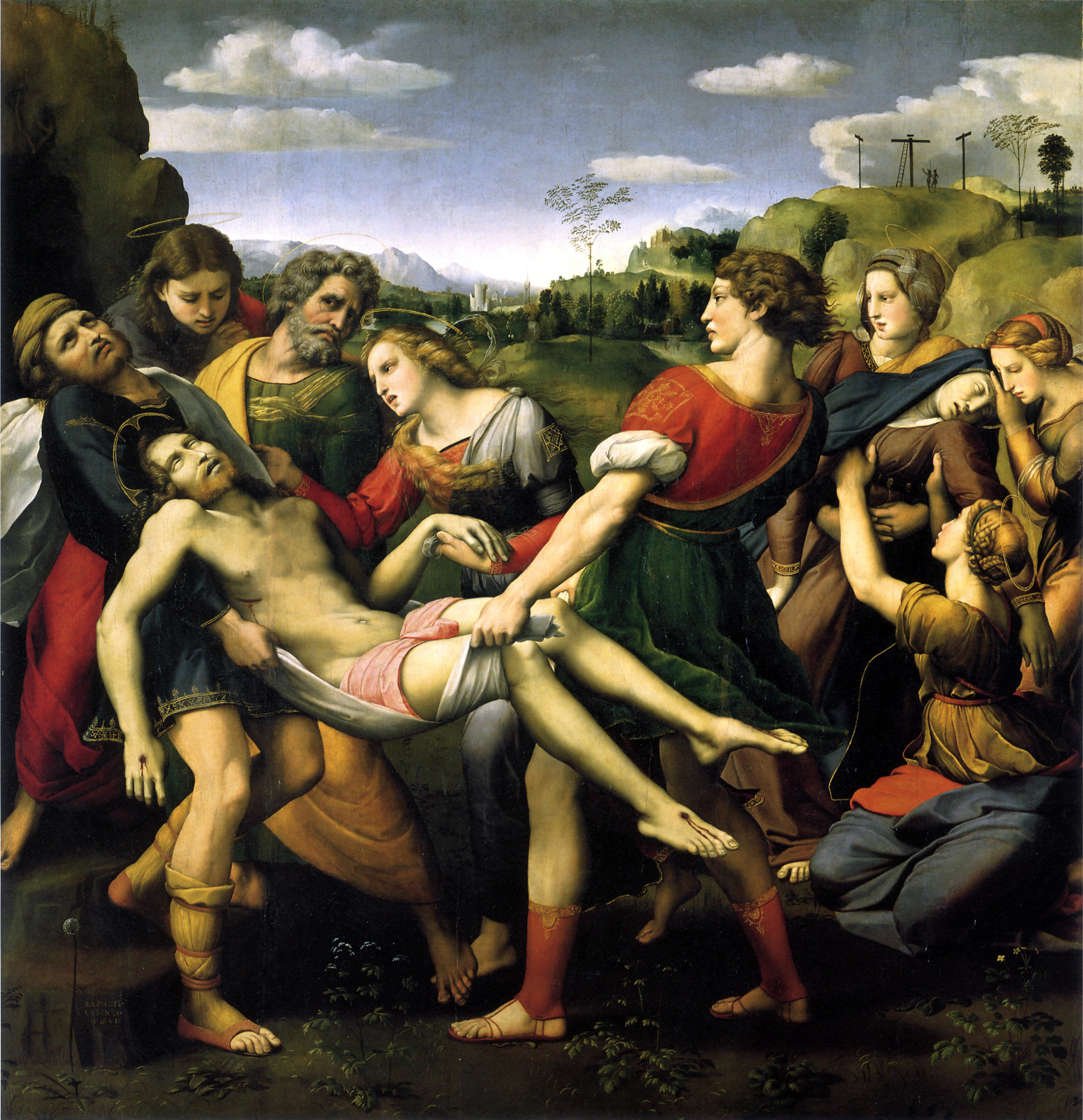
The closing scene of the Passion, related to Jesus’ entombment, opens with an Evangelist recitative, on text inserted from St. Matthew’s Gospel (Matthew 27: 51–52). Bach sets the dramatic account by illustrating the earthquake via a rapid descending scale on the basso continuo line, followed by constant tremolos on the lowest notes of the violoncello register.
The tenor arioso that follows is again based on Brockes’ text, with modifications to turn it more personal and to follow Matthew’s depiction of the earthquake more closely by referencing the torn veil, cracked rocks, and open graves. Bach reinforces this connection by continuing the use of low tremolos on the strings, while the winds soar above them with sustained long notes. The structure is sustained over a continuo pedal point. The arioso ends on a rhetorical question (“[My heart,] what will you do for your part?”) for which Bach changes the sonority by removing the winds and the continuo and softening the strings’ texture.
The question leads to the following movement, a tender and instrospective aria for soprano accompanied by flute, oboe da caccia and continuo. It’s set in the key of F minor, which gives it a particularly fragile tone color. The text of the aria, which borrows some content from the last lines of Brockes’ source segment for the previous arioso, answers the question: the believer’s heart will “dissolve in floods of tears”, because “[its] Jesus is dead.” The musical language puts the four lines on equal footing, all contributing towards painting the musical picture by partaking in its building blocks: the aria’s signature ornamented upward sixth (illustrating sorrow or longing), softly undulating motifs (water), a beating heart (five sixteenths on the same pitch connected under a slur), tears as staccato sixteenths. For part B, Bach uses word painting on “tot” (“dead’): long notes with battement on the voice, and repeated long appoggiaturas. The aria follows an abbreviated da-capo structure, with the original material brought back in modified form to restate the opening lines.
The aria is followed by a long stretch of Gospel delivered by the Evangelist. He narrates the circumstances that lead to fulfillment of additional verses of scripture (Psalm 34: 20, “not one of [his bones] will be broken”; Zechariah 12: 10, “they will look on me, the one they have pierced”). Bach highlights the quoted scripture by marking those passages “adagio”, indicating a measured delivery instead of the freer, speech-like cadence of the typical recitative.
An moment of community reflection comes next, via a chorale setting of stanza 8 of Michael Weiße’s Passion hymn, whose first stanza was used to open Part II. Bach raises the key signature he used before by a half step.
The final verses of John 19 are delivered in the last Evangelist recitative, describing how Joseph of Arimathea and Nicodemus prepare Jesus’ body and lay it in the grave. The concept and significance of the tomb carry forward into the final chorus, a communal meditation on the tomb, which seems to be a substantial reworking of Brockes’ final aria. The main clues that the two texts are connected are the term “Ruh” (“Rest”) and the last line, which is almost identical in both. Bach’s text mentions the “holy limbs”, while Brockes refers more directly to Jesus’ arms and eyes. The believer’s grief gives way to rest, and the tomb, symbolizing the end of suffering, “opens heaven and closes hell”.
Musically, Bach sets the text as a da-capo structure, but recapitulates early in section B, giving us a roadmap of A-BAB-A. The opening motif, repeated three times initially and recurring often, is a clear reference to rest and laying in the grave. The choir delivers the text homophonically throughout. There’s no contrapuntal constructs or imitation among voices, and the overall effect is one of calm and introspection. The B section, where the direct references to the tomb come in, is lighter in texture. The first time, Bach silences all instruments except the continuo. The second time he keeps only upper strings in short staccato quarter notes and removes the basses and the continuo, creating a “bassetto” segment to portray lightness.
The work ends with a communal prayer in the form of a chorale, set to stanza 3 of Martin Schalling’s “Herzlich lieb hab’ ich dich, o Herr”, a familiar funeral hymn dating from 1569. The text traverses death, rest in the grave, and resurrection, transforming Christ’s Passion into the believer’s own hope of eternal salvation.