The cantata “In allen meinem Taten”, BWV 97, does not have a clear designation for a Sunday or feast of the liturgical year. It was first performed in 1734, possibly at a wedding, a theory that comes from a note in score which indicates that the last three movements were to be performed “after the wedding” (i.e. after the marriage ceremony itself in the context of a broader service). However, scholars still debate whether that marking was contemporary to the cantata’s composition or added to the score at a later occasion. There are records of two additional performances of this piece in later years.
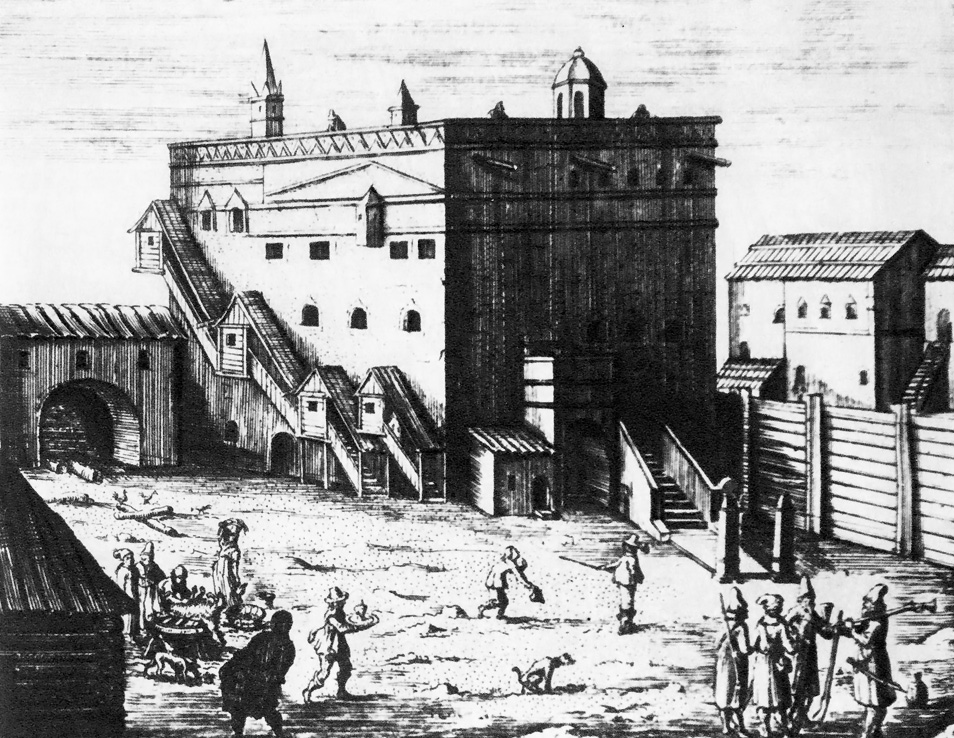
The libretto is by Paul Fleming (1609-1640), a hymn written in the early 1630s in anticipation of a long journey from Germany to Moscow and Persia (today’s Iran), a diplomatic mission sponsored by the duke of Holstein-Gottorp, in which Fleming participated. Originally the poem contained additional stanzas, more directly connected with the purpose of the trip and praying for protection of those who stayed behind at home. With those stanzas removed, the resulting nine-stanza hymn expresses Christian trust in divine providence, examining from this perspective one’s personal actions and efforts, fate, God’s grace, his Word, and ultimately death. In this form, the hymn was included in a collection designated for “marriage and household” use. This is the version that Bach used for his cantata.
The work belongs to a group of just a handful of pieces that follow the “per omnes versus” format – meaning that Bach set up the entire hymn as it stood originally, as opposed to using a libretto blending hymn stanzas with biblical quotes and/or original poetry. In this case, the nine stanzas are cast into different types of musical settings: an opening chorus, a sequence of seven recitatives and arias (including a duet), and a final multi-part chorale setting. The tune originally associated to the hymn is found in the first and last movements only.
The cantata is scored relatively simply: 2 oboes, strings, continuo, four-part choir, and four solo voices. The continuo group explicitly calls for inclusion of a bassoon.
The first movement is set in the form of a French overture. Its first section, marked “Grave” in “cut” tempo, features the typical dotted rhythms and fast ornamental runs, and is repeated once. It then transitions to a vivace which introduces ritornello material on the instruments, before the voices come in to cover the text of the stanza. Each line is opened by the sopranos, who carry the tune in long notes, while the rest of the voices enter in succession with imitative material, coming to an end together. A few bars of orchestral ritornello separate each line of text. After line 3 and 6, the reeds (oboes and bassoon) get a solo trio. Notably, the second half of the stanza is repeated in its entirety at the end, restated by all voices homophonically. In a departure from the typical French overture format, Bach does not repeat the initial slow section.
Movement 2 is an aria for bass and continuo. The stanza ponders about the futility of one’s efforts and worries, as one submits to God’s will. Bach sets the aria in G minor, in an unhurried 6/8 meter which matches the resigned spirit of the text. The continuo states the aria’s motif as an introduction, which the singer picks up as he enters 12 bars later. “Sorgen” (“worries”) is illustrated by a long melisma with embedded syncopations, and “stells” (“place”) is a long, sustained note.
The next stanza of the hymn is set as a short “secco” recitative for the tenor. Bach gives the organ an explicit directive to be silent (“tacet”) in this movement. The two halves of the stanza, separated by a colon in the text, are bridged musically by staccato eighths on the continuo line.
Verse 4 is a tenor aria, with the accompaniment of an extremely virtuosic violin part and continuo (again with the organ marked “tacet”). Marked “Largo” and set in common time, the violin engages in very florid and rich figurations, including multi-voice writing and chords, all of which could be seen as illustrating God’s protecting and nurturing grace mentioned in the text.
The alto recitative that follows refers to God’s grace and patience in forgiving one’s sins and transgressions. It’s set as an expressive “accompagnato” for the alto with strings. Again, the two halves of the stanza are separated by eighth notes in all instrumental parts, marked “staccato”.
The recitative’s instrumentation is carried through into the next aria, with the full string orchestra accompanying the alto. The string writing is dense and compact, and generally in a low tessitura, matching the register of the voice. Bach word-paints motivically the ideas of “lying down”, “rising early”, and “setting out”, and illustrates “tröstet” (“comforts”) with long melismas.
Movement 7, whose text refers to accepting one’s fate and overcoming misfortune, is a duet for soprano and bass with basso continuo (apparently with no organ for the first performance). The continuo line can be read as initially determined but faltering (an upward scale followed by rests) which then restarts and navigates an angular and irregular profile (misfortune?) before reaching its destination. The voices then enter imitatively, reusing some of the material first introduced by the continuo.
As a last step before the conclusion of the journey, the believer accepts his or her own death at “the proper time”. An animated aria for soprano, two oboes and continuo introduces the oboes simultaneously, playing off of each other congenially in parallel thirds and sixths. Once the soprano enters, the oboes punctuate her line with short melodic fragments. As expected, Bach musically illustrates some key concepts, like setting “sterben” (“die”) to a long, sustained note immediately followed by a rising melisma on sixteenths for “leben” (“live”).
The final stanza is set as an impressive homophonic chorale with seven real parts: the four choral voices, with the hymn tune on the sopranos supported by the oboes, are augmented by the strings carrying three independent lines.